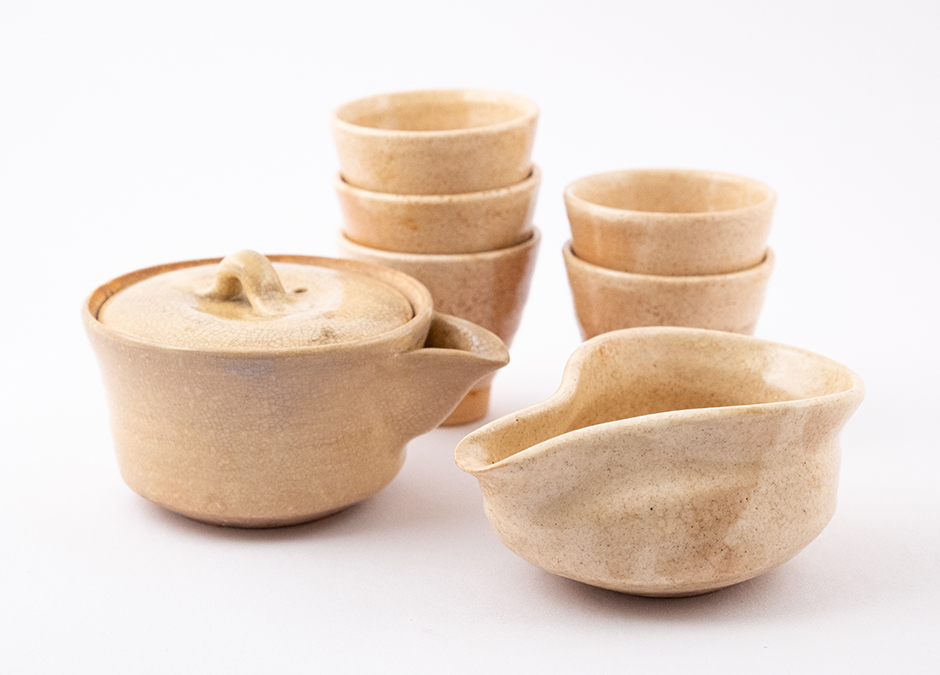
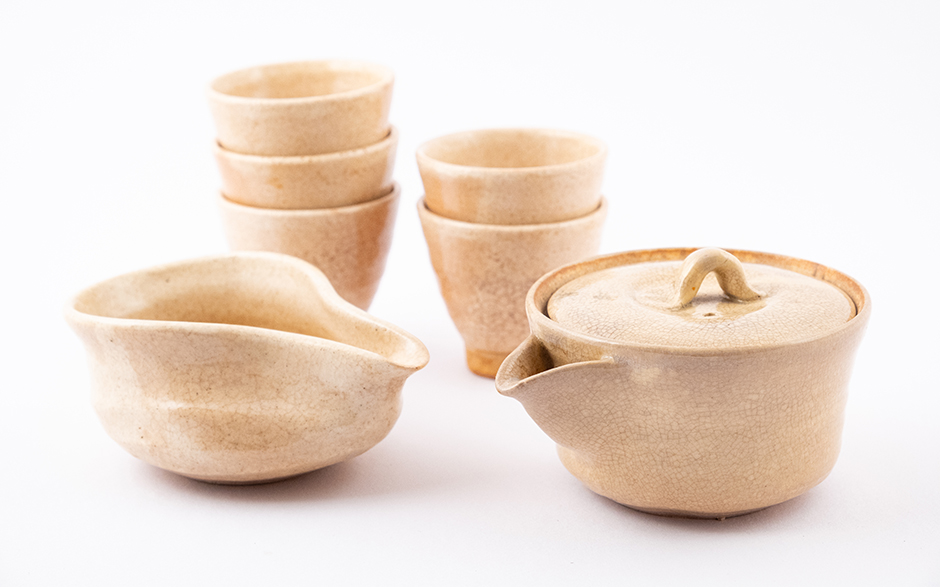
Japanese Hagi Tea Set
country of origin Japan
Chcete pomoci s objednávkou?
+420 777 052 974
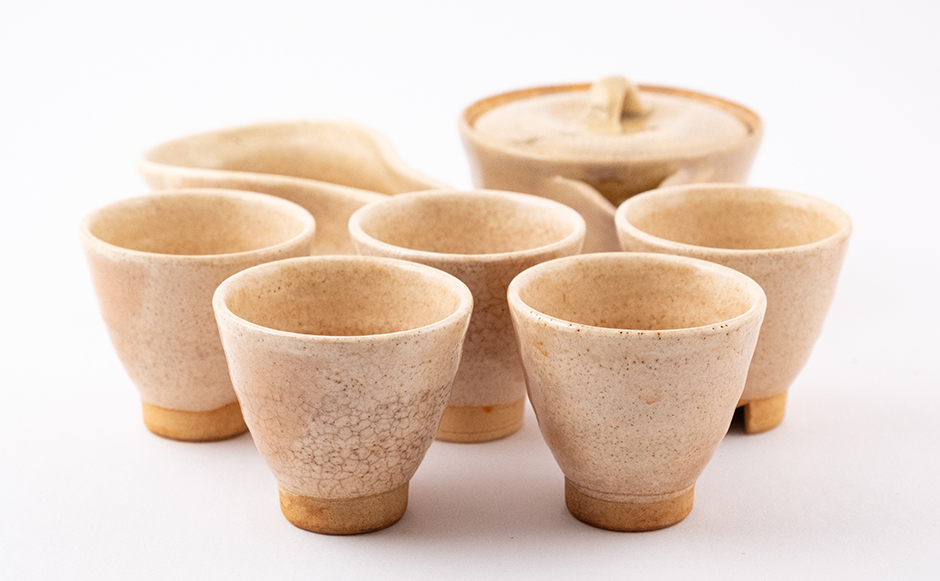
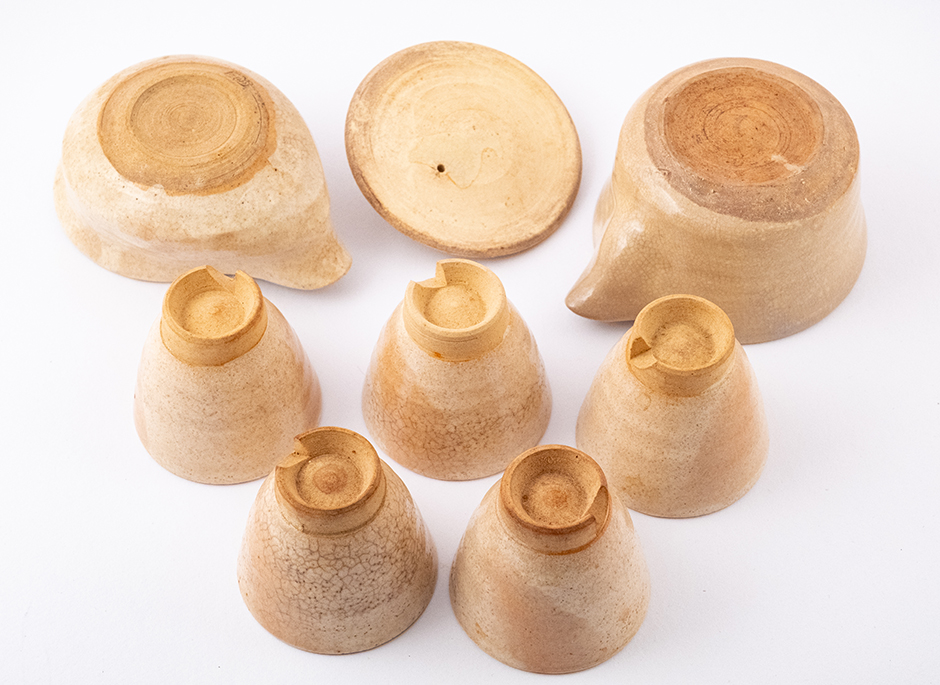
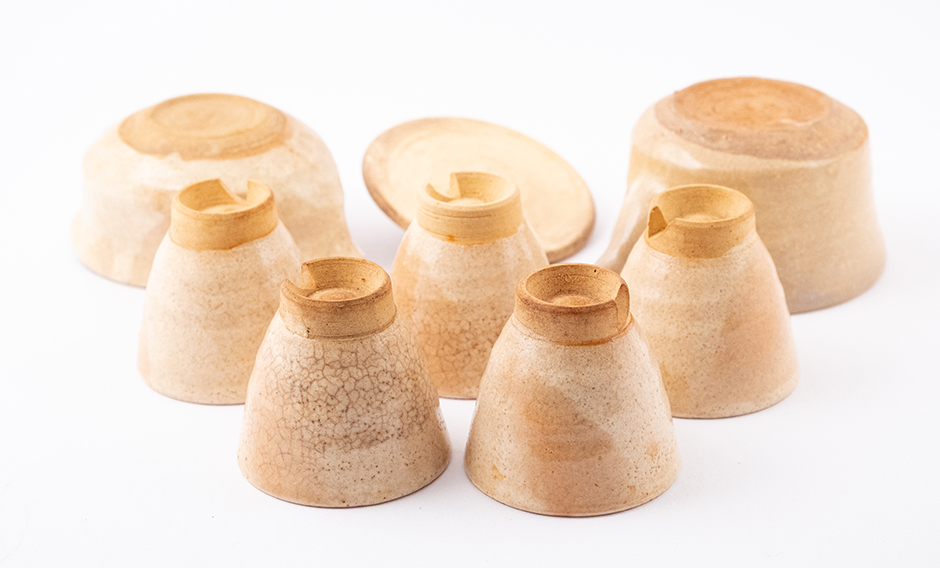
A Hagi-style stoneware set with five bowls. Purchased at a market in Kyoto. Origin and age unknown.
hóhin ø 8.3 cm x height 6.2 cm, capacity 110 ml (measured to the rim of the lid)
yuzamashi ø 10.2 cm x height 4.6 cm, capacity 95 ml (measured to the rim)
cups ø 5.5 cm x height 5 cm, capacity 50 ml (measured to the rim)
Hagi ware
(萩焼 Hagi-yaki) is a type of Japanese pottery most identifiable for its humble forms and use of translucent white glaze. It originated in the early 17th century with the introduction of potters brought back from Japanese invasions of Korea. The local daimyo of the time were very interested in tea ceremony and funded production of this ware. Potters mix different types of local clay. The most standard result is a pink-orange color. Wares are formed on the wheel and decorated with translucent glaze made of feldspar and ash.
Country of origin: Japan